Yugur Ethnic Group
Introduction
The Yugur ethnic group is an ethnic group living predominantly in Sunan Yugur autonomous county in Gansu province of Northwest China. The Yugur people have a rich cultural heritage and a long-standing tradition of nomadic pastoralism, primarily herding cattle and sheep in the grasslands surrounding the Qilian Mountains. This ethnic group is distinguished by its distinctive language, cultural practices, and traditional sports, which have been passed down through generations. The Yugur people have managed to preserve their cultural identity while adapting to modern developments, making them an integral part of China's diverse ethnic tapestry.
History
Historical Development
Throughout history, the Yugur people have maintained a nomadic lifestyle, which significantly influenced their societal structure and cultural practices. They have traditionally been pastoralists, relying on herding sheep and cattle as their primary means of livelihood. This lifestyle has engendered a close-knit community structure with a strong emphasis on familial and tribal ties. The Yugur people have also been influenced by their interactions with neighboring ethnic groups and the broader historical developments within China, leading to a rich tapestry of cultural exchanges and adaptations.
Language
Spoken Language
The Yugur ethnic group is linguistically diverse, speaking several languages that reflect their unique historical heritage. The primary languages spoken by the Yugur people are Western Yugur, an extension of the Turkic language, and Eastern Yugur, which is a Mongolic language. These languages are integral to the Yugur cultural identity, serving as a medium for passing down oral traditions and folklore from one generation to the next. Despite the pressures of modernization, the Yugur people continue to use these languages in daily communication, ensuring their preservation and vitality.
Written Language
Historically, the Yugur people did not have a written script specific to their languages. However, Chinese characters have been adopted for administrative and educational purposes. In recent years, there have been efforts to document and standardize the Yugur languages in written form, utilizing Chinese pinyin and other transcription systems. These efforts aim to preserve the linguistic heritage of the Yugur people and facilitate the transmission of their culture and history.
Culture
Traditional Clothing
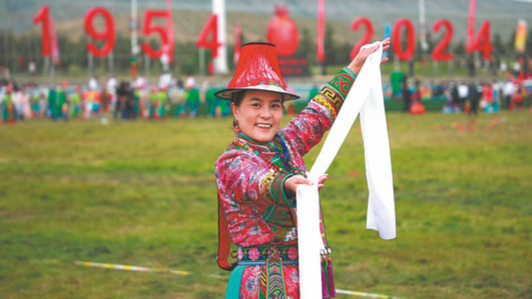
Traditional clothing is an essential aspect of Yugur cultural expression. It reflects their historical lifestyle as nomadic pastoralists and their adaptation to the harsh climatic conditions of the Qilian Mountains. Yugur traditional attire often features bright colors and intricate patterns, symbolizing various cultural motifs. Men typically wear long robes with wide belts, while women's clothing includes colorful dresses adorned with embroidered designs. These garments are not only functional but also serve as a visual representation of Yugur identity and artistry.
Music and Dance
Music and dance hold a special place in Yugur cultural life, serving as a means of storytelling and communal bonding. Traditional Yugur music is characterized by the use of stringed instruments, such as the horsehead fiddle, and percussive elements that accompany folk songs passed down through generations. Dance performances often depict scenes from daily life, historical events, and mythological tales, providing insight into the Yugur worldview and cultural values. These artistic expressions continue to be celebrated at cultural events and festivals, showcasing the vibrancy of Yugur tradition.
Festivals
Festivals play a significant role in the Yugur cultural calendar, providing opportunities for communal gathering and cultural expression. One of the most important festivals is the Yugur New Year, which marks the beginning of the pastoral cycle and is celebrated with traditional rituals, music, and dance. Other festivals may be linked to the agricultural calendar or specific historical events significant to the Yugur people. During these celebrations, traditional sports such as Lapaniu, a rope-pulling game similar to tug-of-war, are often played, reflecting the Yugur's connection to their nomadic heritage.
Economy
Agriculture
Agriculture, alongside pastoralism, forms the backbone of the Yugur economy. The fertile lands at the foot of the Qilian Mountains provide suitable conditions for growing various crops. Traditional farming practices have been adapted to the region's unique climate, focusing on crops that can thrive in the alpine environment. While herding remains the primary occupation, agricultural activities complement the pastoral lifestyle, ensuring food security and economic stability for the Yugur communities.
Livestock Husbandry
Livestock husbandry is the cornerstone of the Yugur economy and cultural identity. The Yugur people have honed their skills in herding sheep and cattle, adapting to the challenges posed by the mountainous terrain and climatic conditions. Seasonal migrations to higher pastures are a traditional practice that supports the well-being of the herds and allows for sustainable use of grazing lands. This deep-rooted connection to livestock shapes many aspects of Yugur culture, from traditional sports to culinary practices.
Cultural Preservation and Promotion
Cultural preservation and promotion are key priorities for the Yugur ethnic group, as they navigate the challenges of modernization and globalization. Efforts to document and promote Yugur cultural heritage include the organization of cultural festivals, sports events, and educational programs that highlight traditional practices and values. These initiatives seek to foster a sense of cultural pride and continuity, ensuring that the rich tapestry of Yugur culture is passed down to future generations.








